
Academic and Research Institution Applications
Academic and research institutions are the core drivers of material science, engineering technology, and process innovation, encompassing universities, research centers, national laboratories, and industrial technology research organizations. Their research spans metallic materials, composite materials, semiconductors, energy materials, biomedical materials, and advanced manufacturing technologies, demanding an exceptionally high level of precision, repeatability, and data credibility in material analysis.
Compared to mass-production industries, academic and research units place a greater emphasis on the reproducibility, traceability, and consistency of measurement results, as all data serve as the foundation for journal publications, technical reports, patent applications, or inter-institutional collaborations. Consequently, stable, reliable material testing and analysis equipment that complies with international standards represents an indispensable research infrastructure for academic and research institutions.
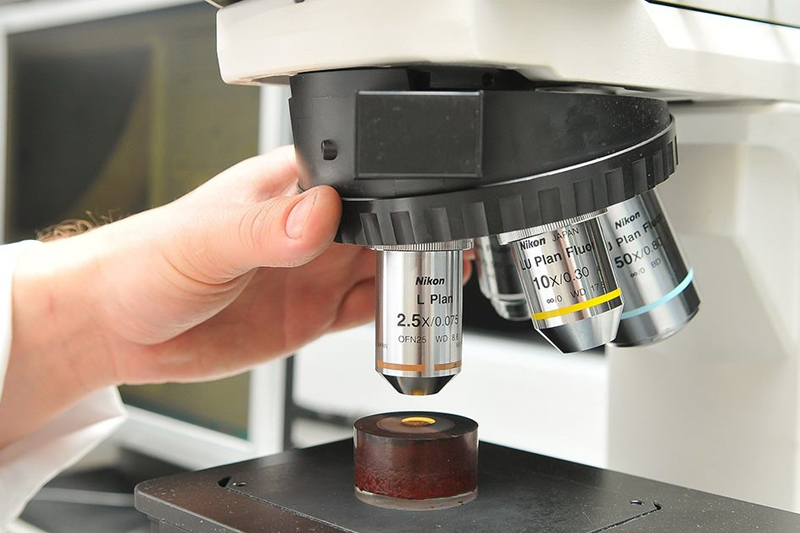
1. Research Application Scope and Material Types
The subjects of research encompass various metallic materials, alloys, stainless steels, aluminum alloys, titanium alloys, superalloys, as well as novel functional materials, coatings, thin films, and composite materials. Because research samples vary widely in size—ranging from large-scale specimens to microscopic samples—there is a high demand for equipment with a broad testing range, high resolution, and flexible configuration capabilities.
2. Research-Oriented Core Testing Requirements
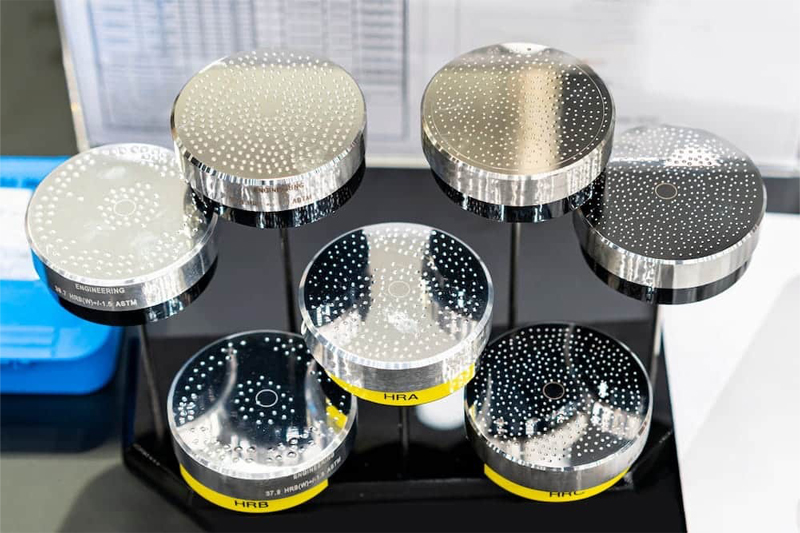
In academic research, the purpose of material testing goes beyond simply acquiring numerical values; it lies in establishing research conclusions that can be repeatedly verified. Hardness testing is frequently utilized for material property comparisons, process impact analyses, and theoretical model validations. Rockwell hardness testing is suitable for general material property evaluations and educational laboratory experiments, while Vickers and micro-Vickers hardness testing are widely applied in fine structural analysis, surface modification layer evaluation, and novel material research. For thin films, coatings, or microstructured materials, micro-Vickers and even Knoop hardness testing serve as indispensable research tools.
3. Micro-Zone Analysis and Metallographic Research
Academic research often requires an in-depth exploration of material performance variations across different regions, depths, or processing conditions. By combining micro-hardness measurements with metallographic cutting, mounting, grinding, polishing, and microscopic observation, researchers can precisely analyze grain structures, phase transformations, hardening layer depths, and interface conditions. These analysis results frequently serve as vital evidence for academic papers, research reports, and technical exchanges, presenting a high demand for measurement precision and imaging quality.
4. Research Data Reliability and Standards Compliance
Material testing must comply with international standards such as ASTM, ISO, and JIS to ensure that research outcomes possess global comparability. When academic and research institutions conduct material testing, adherence to international standards like ASTM, ISO, and JIS is mandatory to ensure that research results can be cross-referenced and verified by the global research community.
Equipment stability, calibration capabilities, and data management functions directly impact the credibility of research outcomes. Hardness testing and material analysis equipment equipped with stable load control, high-resolution measurement, and comprehensive data output functionalities can effectively enhance research efficiency and minimize human error.

5. Collaborative Requirements for Education, Research, and Interdisciplinary Integration
Beyond advanced R&D, many academic and research institutions integrate materials testing equipment into engineering laboratory curricula and workforce development programs. Consequently, these instruments must combine robust operator safety features, intuitive user interfaces, and educational flexibility, allowing students to seamlessly bridge the gap between theoretical material behavior and practical testing principles. Simultaneously, the growing trend toward interdisciplinary innovation requires testing systems to offer high integration capabilities, efficiently supporting diverse applications across material science, mechanical engineering, electronic engineering, and renewable energy research.
6. Equipment Selection Guide and Integrated Application Infrastructure
When configuring laboratories for academic and research institutions, the equipment infrastructure must simultaneously satisfy basic educational demonstrations, advanced scientific research, and long-term operational durability.
7. Academic and Research Institution Equipment Selection Guide
| Application Scenario | Testing Objective | Main Measurement Items | Recommended Equipment | Description |
|---|---|---|---|---|
| Educational Laboratory | Foundational material understanding | General hardness | Rockwell Hardness Tester | Ideal for instructional training and introductory lab experiments. |
| Research Testing | Material property comparison | Hardness values | Vickers Hardness Tester | Engineered for journal publications and advanced academic research. |
| Micro-Zone Research | Fine structural analysis | Micro-zone hardness | Micro Vickers Hardness Tester | Suited for thin layer, coating, and localized site analysis. |
| Surface Modification | Interface evaluation | Surface layer hardness | Micro Vickers / Knoop Hardness Tester | Prevents specimen breakthrough on ultra-thin coatings. |
| Material Characterization | Microstructural and metallographic studies | Metallographic structure | Metallographic Sample Preparation Equipment | Covers precision cutting, mounting, grinding, and polishing workflows. |
| Data Verification | Minimizing operational error | Automated measurement | Fully Automatic Hardness Testing System | Significantly enhances testing repeatability and R&D throughput. |