
Energy and Battery Industry Applications
The energy and battery industry is a highly technology-intensive and rapidly evolving critical sector. It encompasses lithium-ion batteries, solid-state batteries, fuel cells, energy storage systems (ESS), and new-energy-related equipment. Its products are widely applied in electric vehicles (EVs), energy storage grids, consumer electronics, industrial power conditioning, and renewable energy sectors. Because battery products must withstand long-term charge-discharge cycles, thermal stress, mechanical stress, and chemical reactions during practical operations, material performance and manufacturing process stability directly affect overall safety, lifespan, and system reliability.
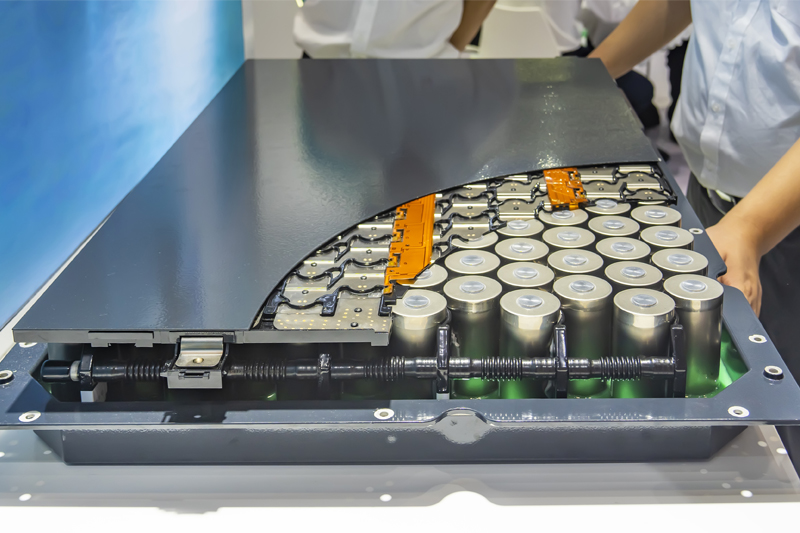
As the scale of new energy applications continues to expand, the energy and battery industry's requirements for material quality have extended beyond electrical performance to include structural strength, interface stability, and long-term reliability. Consequently, establishing a stable quality control process through a rigorous and traceable material analysis and measurement system has become an indispensable and core foundation for energy and battery manufacturing.

1. Scope of Applied Components and Materials
The components encompassed by the energy and battery industry include battery casings, electrode sheets, current collectors, terminals, weld joints, interconnect tabs, module structural components, and system mounting brackets.
2. Process-Oriented Core Testing Requirements
Hardness testing is widely utilized in incoming material inspection, in-process sampling, and final quality assurance to ensure material conditions and manufacturing process stability.
3. Micro-Hardness and Interface Analysis
Through micro-Vickers hardness measurement, high-resolution analysis can be performed on weld joints, interfaces, and thin-layer materials.
4. Safety, Failure Analysis, and Quality Verification
Through hardness distribution analysis and metallographic inspection, the sources of material anomalies and manufacturing process deviations can be effectively clarified.
5. Equipment Selection and Integrated Application Framework
By integrating Rockwell, Vickers, and micro-Vickers hardness testers with metallographic specimen preparation equipment, a comprehensive and robust testing system is established.
6.Energy and Battery Industry Equipment Selection Guide
| Application Scenario | Testing Objective | Main Measurement Items | Recommended Equipment | Description |
|---|---|---|---|---|
| Incoming Inspection | Material consistency | Metal hardness | Rockwell Hardness Tester | Casings and structural components |
| In-Process Sampling | Process stability | Hardness variation | Rockwell Hardness Tester | Real-time monitoring |
| Weld Joint Analysis | Joint quality | Micro-zone hardness | Micro Vickers Hardness Tester | Welded areas |
| Thin-Layer Analysis | Interface stability | Surface hardness | Micro Vickers Hardness Tester | Coating evaluation |
| R&D Verification | Material comparison | Hardness gradient | Vickers Hardness Tester | New materials |
| On-Site Testing | Rapid confirmation | On-site hardness | Portable Hardness Tester | Large components |
| Failure Analysis | Issue traceability | Hardness + Metallography | Metallographic Sample Preparation Equipment | Crack analysis |