
Automotive & EV Industry Applications
The automotive sector is driving a dual transition, balancing internal combustion engine (ICE) vehicles with the rapid rise of electric vehicles (EVs).
- Traditional Automotive (ICE): Requires robust quality control for powertrains, chassis structures, and heat-treated mechanical components.
- Electric Vehicles (EV): Demands high-precision testing for battery systems, electric motors, and lightweight materials.
For both legacy and next-generation mobility, verifying material hardness, microstructure, and process stability remains paramount to ensuring driver safety and long-term component lifespan.
1. Traditional Automotive Components
Safe and durable vehicle performance relies on precise hardness consistency and heat treatment validation across gears, powertrains, and chassis components.< /p>
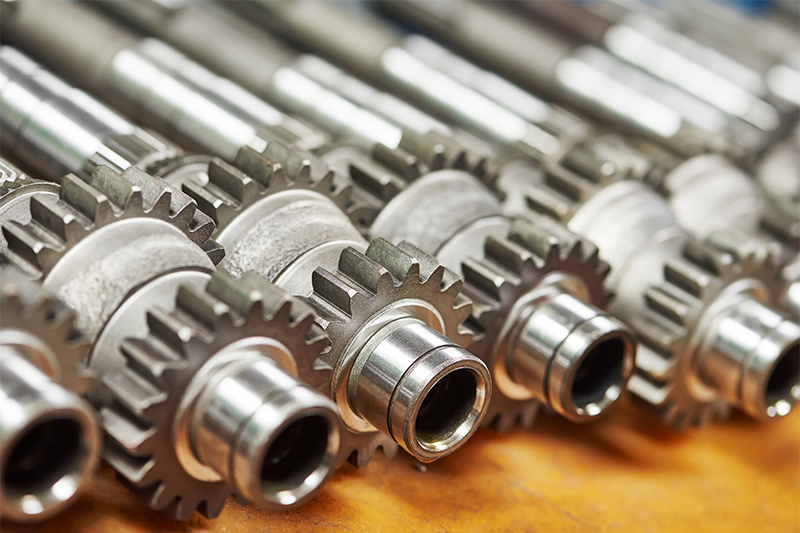
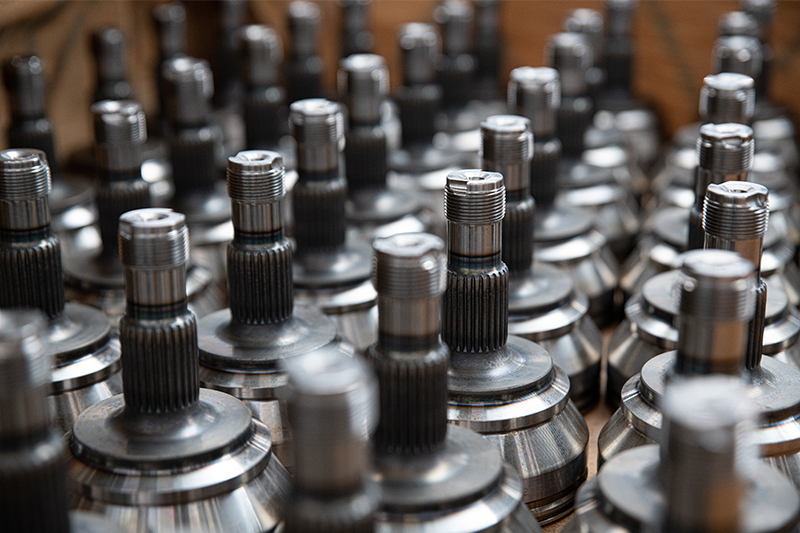
- Key Components: Gears, transmission parts, drive shafts, crankshafts, bearings, and high-strength / hot-stamped steel.
- On-Site QC (IQC/IPQC/OQC): Rockwell testers for rapid batch screening; Brinell testers for large castings and forged parts.
- Heat Treatment & Failure Analysis: Micro Vickers profiling and metallographic inspection verify case depth, analyze hardness gradients, and diagnose component fractures or gear wear.
Implementing reliable testing methods ensures strict process stability and structural integrity for critical automotive assemblies.
2. Electric Vehicle (EV) Applications
Next-generation mobility demands advanced material validation to ensure component reliability and lightweight efficiency.
- Key EV Components: Battery enclosures, motor shafts, rotors, stator cores, high-voltage copper busbars, and lightweight aluminum structures.
- Core Testing Focus: Evaluating material degradation after welding/forming, bonding strength, and localized mechanical properties.
- Recommended Methodology: Micro Vickers and Ultrasonic Contact Impedance (UCI) hardness testing, engineered specifically for thin-gauge and ultra-precise EV components.
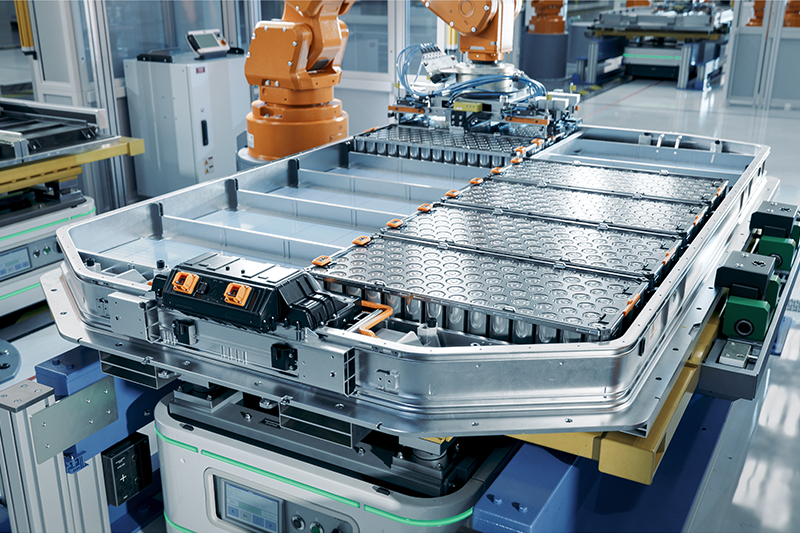
EV Battery Modules
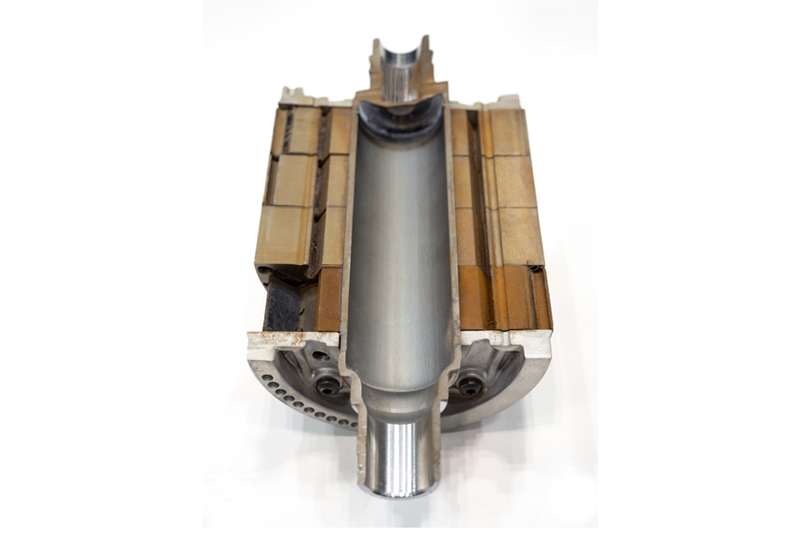
EV Traction Motors
Common EV Application Scenarios
- on motor shafts, and crimped areas of conductive terminals.
- Non-Destructive Testing: Ultrasonic Contact Impedance (UCI) testing delivers precise Vickers-equivalent hardness without damaging aesthetics or component functionality.
3. Equipment Selection Guide
Traditional Automotive (ICE)
- Hardness Testers: Rockwell (HRC / HRB), Vickers, and Brinell testers.
- Metallographic Workflow: High-magnification microscopes paired with precision cutting, hot mounting, and grinding/polishing systems.
Electric Vehicles (EV)
- Hardness Testers: Micro Vickers (HV0.01–HV1), Automatic Indentation Measurement Systems, Ultrasonic Contact Impedance (UCI), and Leeb testers.
- Metallographic Workflow: Fully integrated sample preparation equipment and microscopic analysis systems.
The TN Nakazawa Advantage:
Our integrated hardness testing and metallographic turnkey solutions empower automotive and EV manufacturers to establish traceable, high-stability quality control, minimize process risks, reduce warranty costs, and fully comply with ISO, ASTM, and JIS international standards.
Traditional Automotive Components
| QC Demand | Test Method | Recommended Equipment | Notes |
|---|---|---|---|
| Mass Production (Fast Screening) |
Rockwell (HRC/HRB) | Rockwell Hardness Tester | Rapid testing; ideal for on-site IQC, IPQC, and OQC. |
| Material Verification (Cross-Validation) |
Vickers (HV) | Vickers Hardness Tester | Best for lab verification and pre/post-process comparison. |
| Large/Coarse Materials (Castings & Forgings) |
Brinell (HB) | Brinell Hardness Tester | Large indentation; ideal for heavy structures and castings. |
| Case Depth Analysis (Hardness Gradients) |
Micro Vickers | Micro Vickers Hardness Tester | Analyzes hardness profiles for carburizing and induction hardening. |
| Failure Analysis (Quality Verification) |
Microstructural Analysis | Metallographic Microscope | Detects structural anomalies and cracks for client claims. |
| Sample Preparation (Pre-treatment) |
Cutting / Mounting / Polishing | Cutting, Hot Mounting & Polishing Machines | Ensures stable, repeatable, and high-quality sample prep. |
E-Mobility Applications
| QC Demand | Test Method | Recommended Equipment | Notes |
|---|---|---|---|
| Thin-Wall & Micro Zones | Micro Vickers (HV0.01–HV1) |
Micro Vickers Hardness Tester | Ideal for battery enclosures, weld zones, and localized hardened areas. |
| Automation & Consistency | Auto-Indentation Recognition | Auto-Indentation Measurement System | Minimizes human error; maximizes repeatability and throughput. |
| High Aesthetics Required | Ultrasonic Vickers (UCI) | Ultrasonic Contact Impedance Tester | Microscopic indentation; non-destructive to surface finish. |
| Large / Non-Portable Parts | Leeb Hardness | Leeb Portable Hardness Tester | Designed for rapid on-site screening and quick field audits. |
| New Materials Lab R&D | Vickers / Micro Vickers | Vickers / Micro Vickers Hardness Tester | Evaluates material properties and pre/post-process variation. |
| Precision Sample Prep | High-Flatness Metallography | Precision Metallographic Cutting & Polishing Systems | Essential for thin parts to guarantee data credibility. |