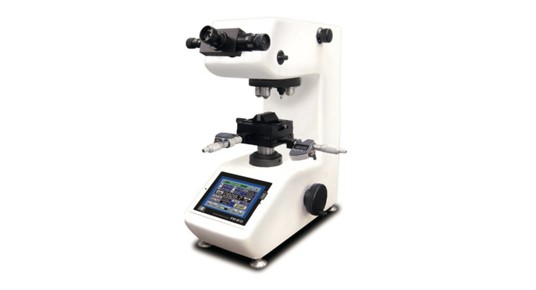
What is the principle behind hardness testing?
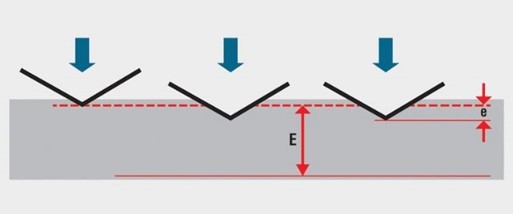
Take the most common Rockwell hardness as an example HR
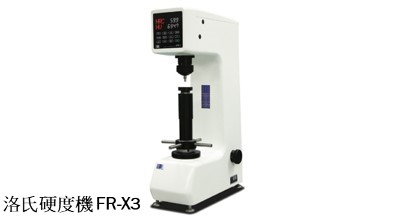
Rockwell hardness is a rapid hardness testing method developed for production control, using direct readings, and is primarily used for metal materials. Rockwell hardness (HR) can be calculated by measuring the depth of the indentation obtained after pressing an indenter into the specimen material using a given load.
- More commonly used for specimens with larger workpiece bodies
- A rapid testing method primarily used for metal materials
- Widely used for process testing, such as quenching, tempering, and annealing tests (HRC)
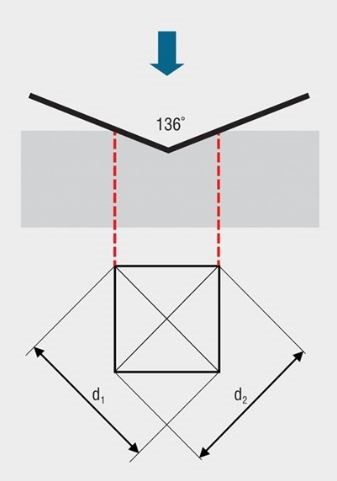
One of the common hardness tests: Vickers hardness HV
Vickers hardness is a hardness testing method applicable to all solid materials, including metal materials. After a diamond pyramid indenter is used to leave an indentation under a given load, the Vickers hardness (HV) can be calculated by measuring the diagonal length of the indentation in the specimen material. The indentation diagonals can be measured optically to determine the hardness through tables or formulas.
- Suitable for various applications (quenching, surface hardness, carburizing, etc.)
- A hardness testing method applicable to all solid materials, including metal materials
- Includes subgroups used for hardness testing of welding points
- Requires pre-processing (metallographic mounting)
- Longer test preparation time